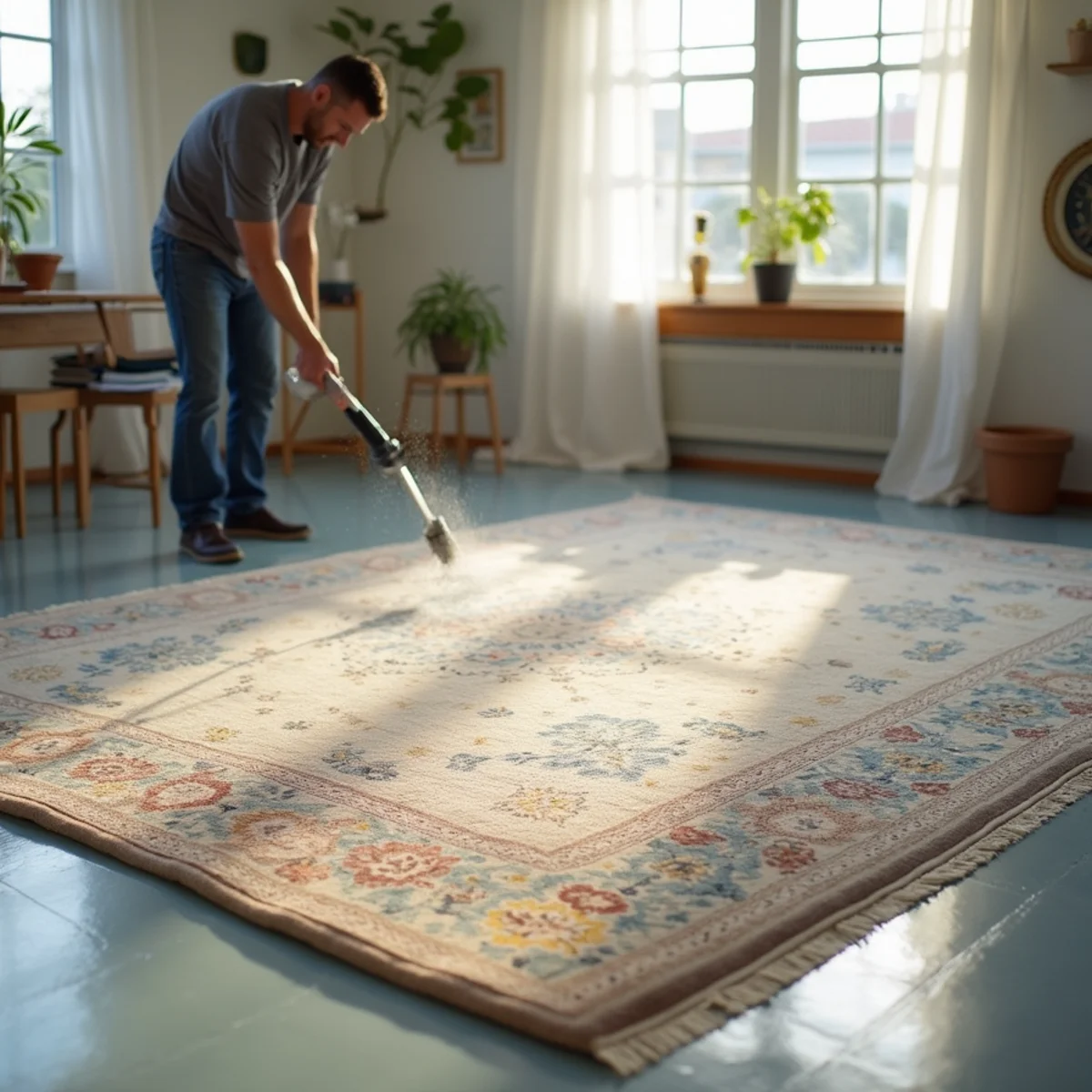
When a pipe bursts, a washer overflows, or coastal humidity leaves a beautiful rug damp and musty, it's easy to assume the rug is ruined. Often it isn't. With fast, careful handling, many water-damaged rugs can be cleaned, dried, deodorized, and brought back to life. Our flagship Rug Restoration in Oceanside, CA is built for exactly this — including treasured Persian, Oriental, and wool rugs that deserve a gentle, specialist's touch rather than a one-size-fits-all wash.
Living near the coast adds its own wrinkle. Salt air and ocean humidity keep fibers damp longer, beach sand grinds into the foundation, and a rug that "feels dry" can still hold moisture deep in its backing — the perfect recipe for a musty smell that keeps coming back. We understand these local realities because we've cleaned hundreds of Oceanside homes, rentals, and condos.
Here's our honest promise: we'll inspect your rug, tell you plainly what can and can't be saved, and use eco-friendly, non-toxic solutions that are safe around kids and pets. Free pickup and evaluation throughout Oceanside and North County San Diego. Call Always Rug & Upholstery at (216) 483-2200 to get started.
Can a Water-Damaged Rug Actually Be Saved?
The short answer: often yes, but it depends on three things — how dirty the water was, how long the rug stayed wet, and how the rug is built. A rug soaked by clean water and addressed quickly has a strong chance of full recovery. A rug that sat in contaminated flood water for days, or one already showing dry rot in its foundation, is a tougher case.
Speed matters more than almost anything. The longer water sits in the fibers and backing, the more you risk mold growth, dye migration (color bleeding), foundation weakening, and stubborn musty odor. That's why we encourage homeowners to act fast and let us evaluate the rug rather than guessing.
We'll never overpromise. After our free evaluation, we'll tell you honestly whether full restoration, partial cleaning, or replacement makes the most sense. Many rugs that look hopeless when wet clean up beautifully — but we'd rather set a fair expectation than oversell a salvage we can't deliver.
Our Coastal Clean Rug Restoration Process, Step by Step
Water-damaged rugs need a different workflow than a routine cleaning. Ours is methodical, gentle, and built around protecting the fibers and foundation at every stage.
Because saturated rugs are heavy and delicate, most water-damage work happens off-site in a controlled environment rather than in your living room. That lets us extract water thoroughly, dry under controlled airflow and humidity, and finish without rushing — which protects both the rug and your floors.
- Inspect & Identify — We examine fiber type, construction, water category, dye stability, and any existing dry rot or weak spots, then document the rug's condition.
- Pre-Treat & Extract — We remove standing water and trapped grit with low-moisture extraction, targeting beach sand and salt that settle into the foundation.
- Deep Clean — Hand-wash for delicate Persian, Oriental, silk, and wool rugs; a gentle hot water extraction for sturdier synthetics — always with eco-friendly, non-toxic solutions.
- Sanitize & Deodorize — An antimicrobial and deodorizing step tackles bacteria, mildew, and that lingering musty ocean-air smell at the source.
- Controlled Drying — Rugs dry under managed airflow and humidity (and centrifuge extraction where appropriate) to prevent re-wicking, color run, and shrinkage.
- Repair & Groom — Re-fringing, edge serging, and grooming finish the job, followed by a final walk-through inspection before delivery.
What To Do in the First 24 Hours After a Rug Gets Soaked
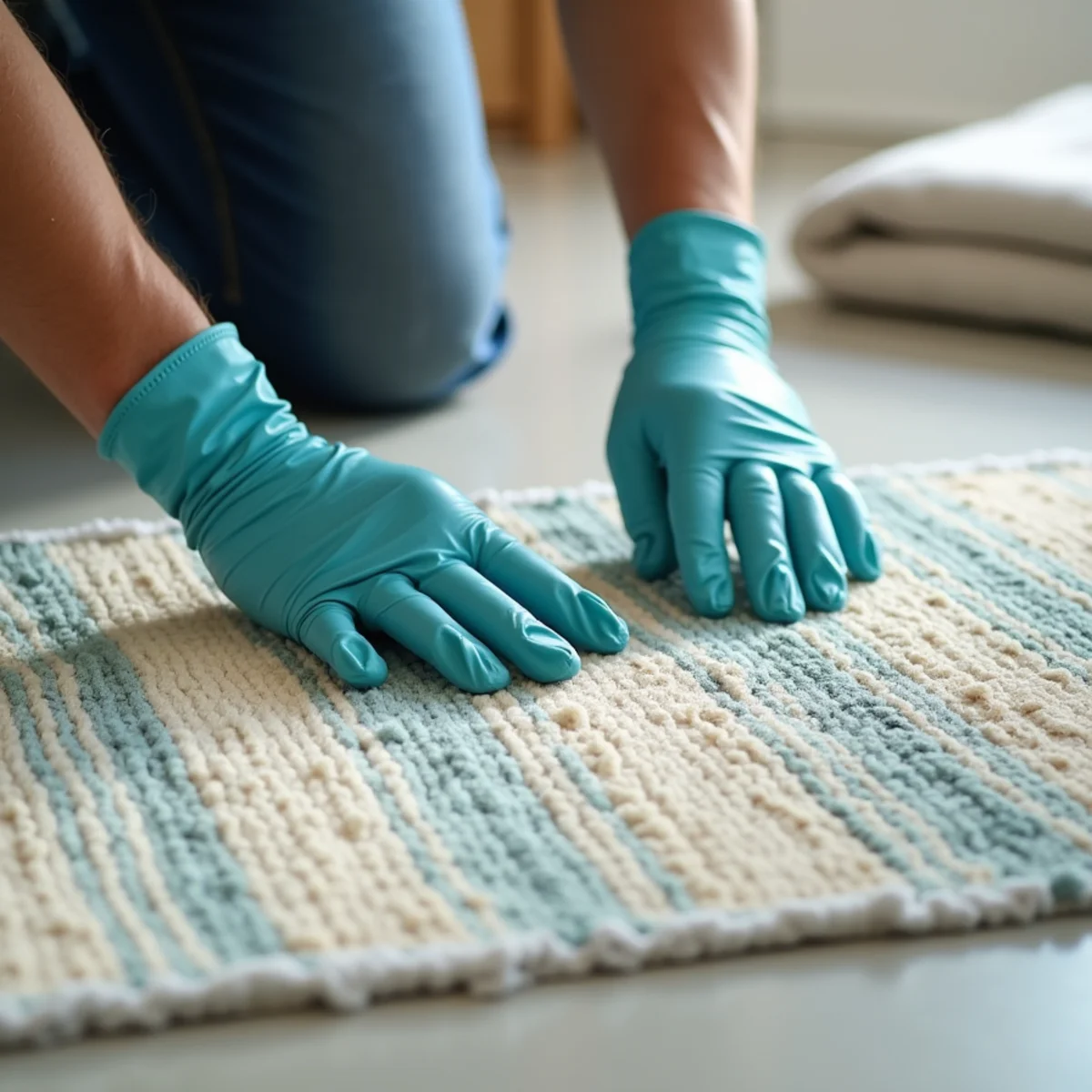
The first day is critical, and a few simple moves can dramatically improve your rug's odds. If it's safe to do so, stop the water source first, then act quickly to remove moisture before mold gets a foothold.
Mold and mildew can begin developing on a wet rug within about 24 to 48 hours, so the goal is to get the rug as dry as possible, as fast as possible, while you arrange professional help.
- Lift the rug off wet flooring and move it to a dry, well-ventilated area to stop moisture from wicking back in.
- Blot — don't scrub — with clean towels to absorb as much water as you can without grinding water deeper into the pile.
- Improve airflow with fans and, if you have one, a dehumidifier to pull humidity down (especially important in our coastal climate).
- Skip the sun and the clothesline — direct sun and hanging a heavy wet rug can fade dyes, distort the shape, and stress the foundation.
- Don't use bleach or harsh household chemicals, which can set stains, bleed dyes, and damage natural fibers.
- Call us early. The sooner we evaluate and begin controlled drying, the better the outcome.
Clean, Gray, and Black Water: Why the Category Changes Everything
Not all water damage is equal. Restoration pros classify water into three categories, and the category drives how much sanitizing and labor your rug needs — and whether it's safe to keep at all.
Clean water (Category 1) comes from sources like a supply line or rainwater and is the most recoverable. Gray water (Category 2) carries some contamination — think washing-machine overflow or a dishwasher leak — and needs thorough sanitizing. Black water (Category 3), from sewage or outdoor flooding, is contaminated with bacteria and pathogens; rugs exposed to it require serious decontamination and, in some cases, can't be safely restored.
When you call, tell us where the water came from. That single detail helps us plan the right sanitizing approach and give you an honest read on whether the rug is worth saving.
Mold, Mildew, and That Stubborn Musty Smell
A musty odor is the most common complaint we hear from Oceanside homeowners — and it's not always from a flood. Salt air and ocean humidity keep rugs damp, and a rug stored or laid over a slightly damp floor can grow mildew slowly over time. The smell often means moisture and microbial growth are living deep in the backing, not just on the surface.
Surface deodorizers and air fresheners only mask the problem. Real odor removal means fully cleaning the fibers and foundation, applying an antimicrobial treatment to address the bacteria and mildew causing the smell, and drying the rug completely so it can't return.
If your rug still smells musty even after it seems dry, that's a strong sign moisture is trapped where home methods can't reach. A professional controlled-drying process is usually the fix — and it's exactly what we're set up to do.
Persian, Oriental, Wool & Silk: Restoring Fine Rugs After Water Damage
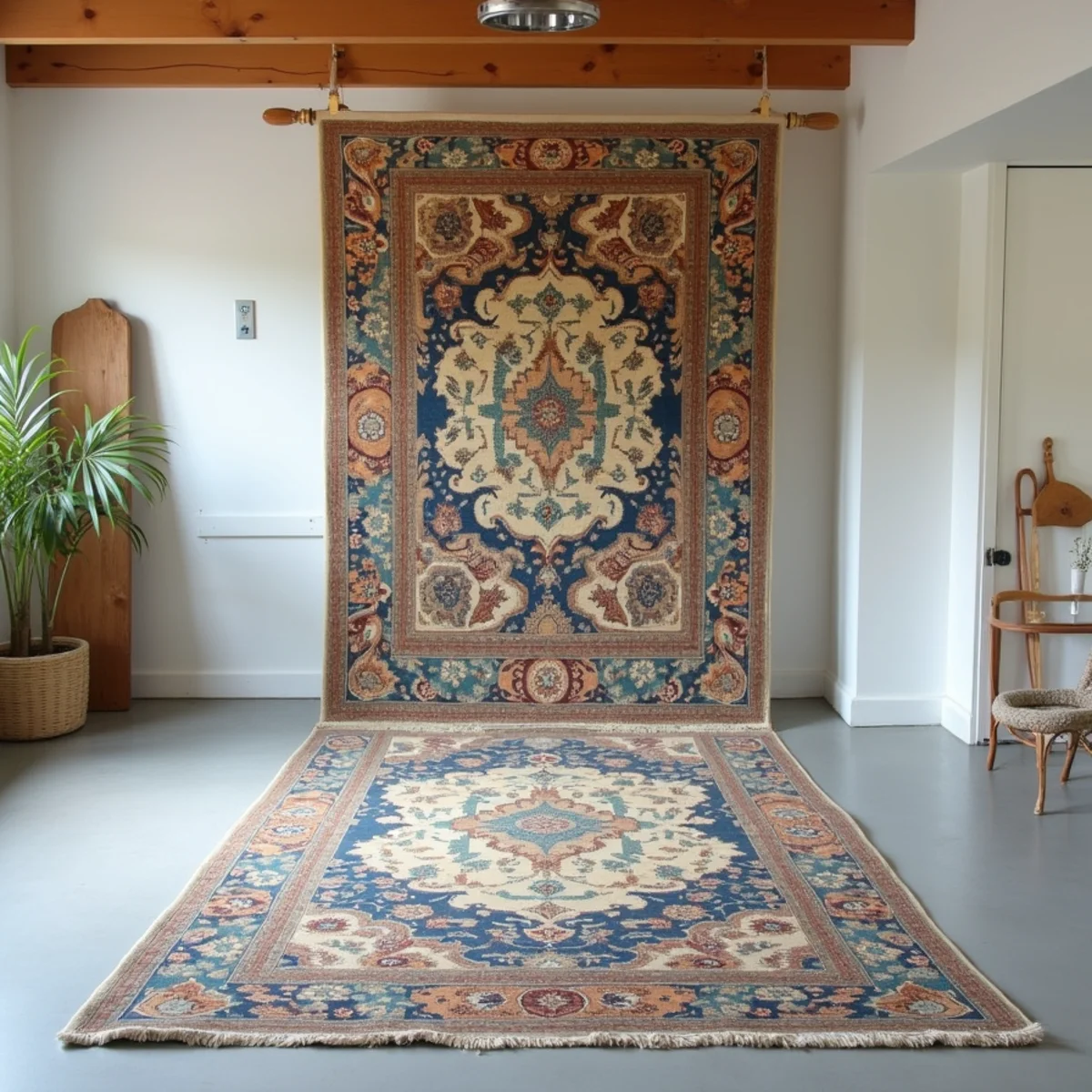
Hand-knotted Persian and Oriental rugs, along with wool and silk pieces, are the heart of our restoration specialty — and they're the rugs most often damaged by improper handling after a spill or flood. Their natural dyes can migrate when wet, their foundations can develop dry rot if they stay damp, and aggressive machine cleaning can do permanent harm.
These rugs get a careful, gentle hand-wash with controlled drying to keep dyes from bleeding and the foundation stable. We test dye stability before we begin and adjust our approach to the specific fiber and weave in front of us.
Different fibers behave differently in water. Wool is resilient but slow to dry and prone to odor if rushed. Silk is delicate and reactive. Cotton foundations can weaken. Jute and sisal are especially vulnerable to water staining and shrinkage. We treat each material on its own terms rather than forcing one method on every rug.
Repairs After Water Damage: Fringe, Edges & More
Water damage doesn't only soil a rug — it can fray fringe, loosen edges, and stress the weave. Restoration isn't complete until those finishing details are addressed, which is why repair is built into our service rather than treated as an afterthought.
Once the rug is clean, dry, and sanitized, we handle the cosmetic and structural touches that bring it back to a finished, usable state. The result is a rug that not only smells fresh and clean but looks whole again.
- Re-fringing to replace or restore damaged or missing fringe.
- Edge serging, binding, and overcasting to secure sides that have unraveled.
- Reweaving and reknotting for areas where the weave itself has been compromised.
- Color correction guidance where dyes have run, with honest expectations about what's achievable.
- Rug pad evaluation and replacement, since saturated padding often can't be saved and can re-contaminate a clean rug.
Free Pickup, Evaluation & Delivery Across Oceanside
Because thorough water-damage restoration belongs in a controlled environment, most of the work happens off-site — and we make that easy. We offer free pickup and delivery throughout Oceanside (92056 and beyond) and surrounding North County San Diego communities like Carlsbad, Vista, San Marcos, Encinitas, and Escondido.
The process is simple: we pick up your rug, evaluate it, and give you a clear, no-pressure assessment of what restoration involves before any work begins. There are no hidden fees and no surprises — just an honest plan and a straight answer.
We're a genuinely local, owner-run shop. Owner Austin and lead technician Cesar handle this work personally, backed by 56 real Google reviews and a 4.9 rating from your Oceanside neighbors. We offer same-week availability for most pickups.
What Water-Damaged Rug Cleaning Solves
- A rug soaked by a burst pipe, leak, appliance overflow, or flood
- Persistent musty or mildew smell that returns even after the rug feels dry
- Mold or mildew growth from prolonged dampness or coastal humidity
- Color bleeding and dye migration from improper drying after water exposure
- Bacteria and contamination from gray or black water exposure
- Beach sand and salt ground into a coastal rug's foundation over time
- Frayed fringe, unraveling edges, and a weakened weave after water damage
- A treasured Persian, Oriental, wool, or silk rug you're afraid to clean yourself